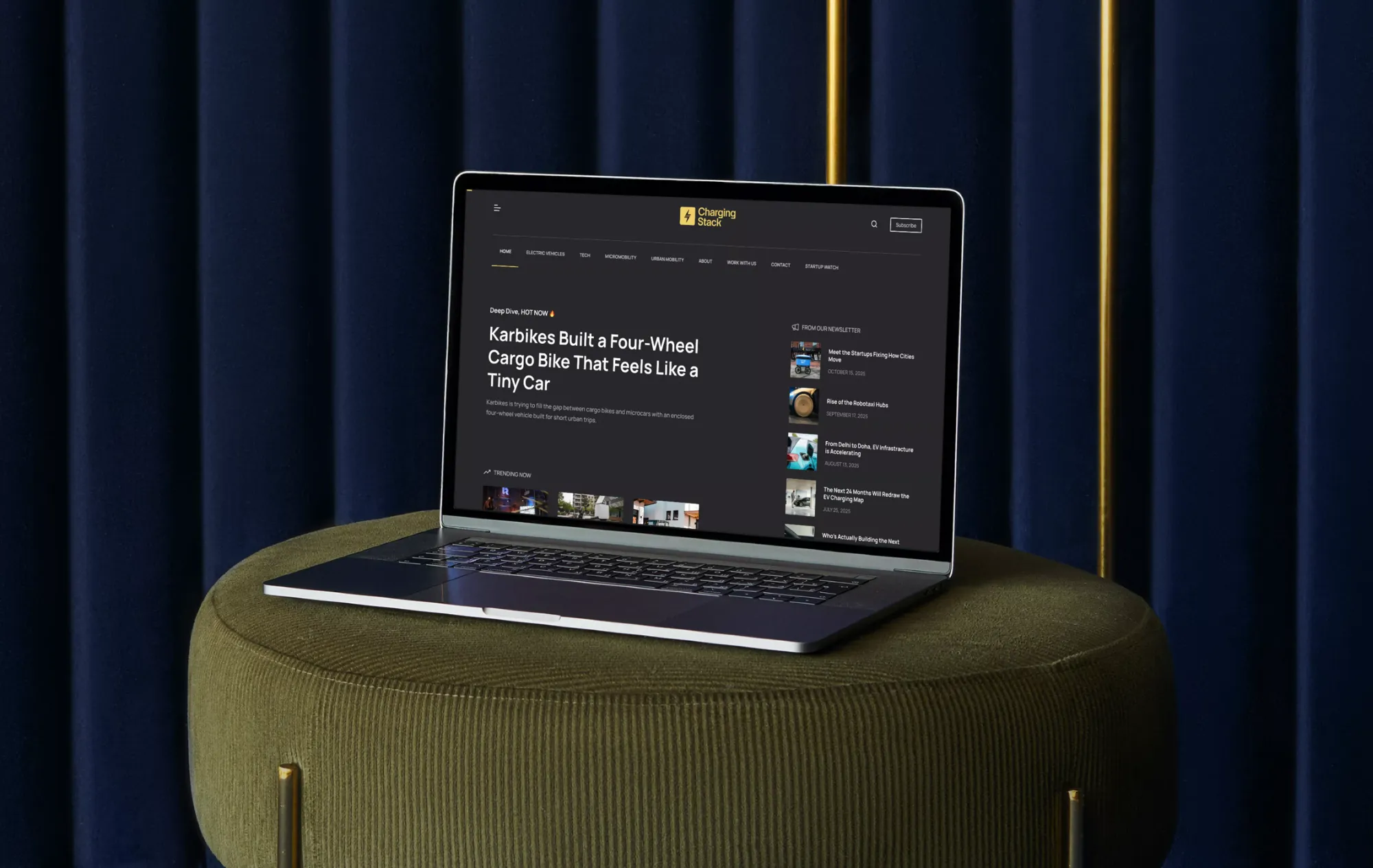
In April 2025, Charging Stack started as a small LinkedIn newsletter. We wanted to spend more time researching the mobility market, understand what companies were building and publish what we learned. We already had experience in mobility and automotive, but barely knew anyone across the wider industry.
It started by finding companies we thought were interesting, doing the research and reaching out to the people behind them. Some agreed to talk. Those first interviews led to more conversations, and Charging Stack gradually expanded into podcasts, videos, company deep dives, event coverage and a growing directory.
Since then, we’ve connected with more than 100 companies, spoken with 60+ founders and executives and made dozens of introductions between people across the industry. People we interviewed introduced us to others, and whenever we knew two people who could help each other, we tried to connect them.
What started as a newsletter became a network of people we actually know, can call and can learn from. Most of it came from doing the research, reaching out and having a real conversation.
Research gave us a reason to talk
Before talking to a founder, we spent time understanding what they were building. That meant looking at the product, the business model, customers, competitors, regulation and whatever else shaped the company around it.
The goal was to know enough to have a useful conversation. We didn’t want to ask someone who had spent years building a company the same five questions they had already answered in every other interview.
That preparation also made reaching out easier. We could mention something specific we had noticed, ask about a decision they had made or point to a part of the business we wanted to understand better. People could usually tell that we had done the homework before contacting them.
The interviews then took us much further than the research could. An hour with a founder often explained why a product looked the way it did, where the business was struggling, what customers were asking for or which assumptions about the market were simply wrong.
One conversation usually left us with several more things to investigate and often a few more people we wanted to meet. After doing that repeatedly, we stopped learning about the mobility market only through websites, reports and press releases. We were learning it directly from the people working inside it.
The publication became the introduction
In the beginning, getting people to talk to us wasn’t easy. Charging Stack had a small audience, only a handful of published interviews and very little history someone could look at before deciding whether to say yes. Some founders turned us down simply because they had no idea who we were.
We kept publishing and inviting people anyway. One interview gave the next person something to look at, companies started sharing the pieces we wrote about them, and previous guests began introducing us to founders they thought we should meet.
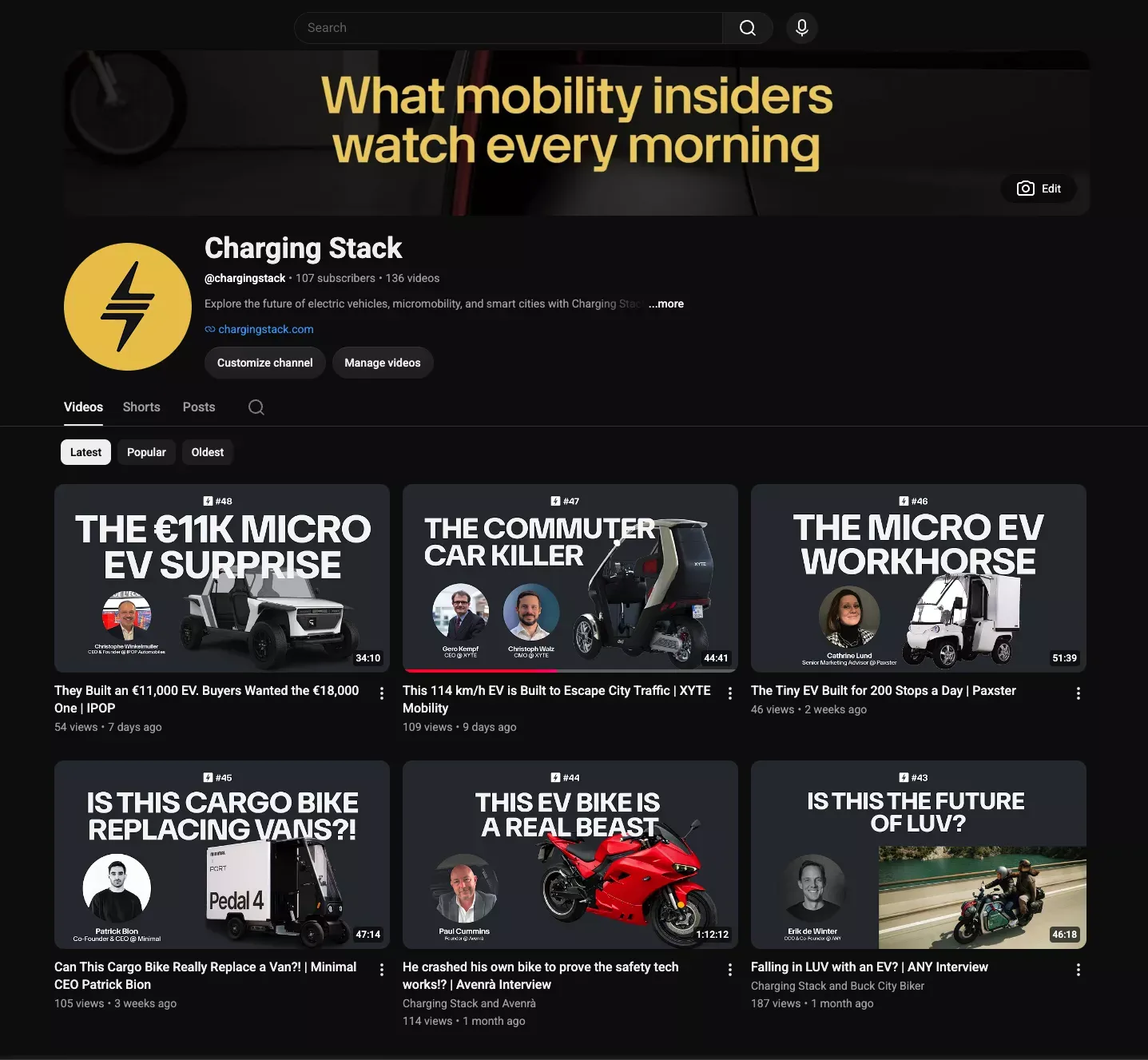
Today, Charging Stack has published more than 200 articles, recorded 50 podcast episodes and produced over 200 videos. We’ve interviewed people from more than 50 companies across Europe, Asia, North and South America, Africa and Australia.
That body of work changed the outreach. Before replying, someone could see who we had already spoken with, watch a few conversations and get a sense of the questions we asked. We no longer had to explain Charging Stack from scratch every time we contacted someone.
Then introductions started happening without us asking for them. Guests connected us with other founders, companies began sending us stories they thought we should cover, and people started asking whether we knew someone working in another part of mobility.
We started doing the same in return. If someone we knew could help with a question, make an introduction or simply be useful to another person we had met, we connected them.
Companies never paid to appear
From day one, we didn’t charge companies for articles, interviews or podcast appearances. If we thought something was worth covering, we covered it.
That kept the conversations focused on what people were actually building. There was no package to sell afterwards and no reason for every interaction to become something more.
Sometimes the value came back in other ways. Zero Motorcycles shared our deep dive with more than 44,000 followers, while other guests introduced us to people, sent stories our way or helped us understand parts of the industry we hadn’t reached yet.
Not every conversation needed to lead anywhere. But after enough of them, some naturally turned into introductions, collaborations and business opportunities for people in the network, including us.
Some conversations continued after the interview
UbiRider is a good example. We first met founder and CEO Paulo Ferreira dos Santos through Charging Stack in June 2025, when we interviewed him about UbiRider, its PICK platform and the problems the company was solving in public transport.
We stayed in touch after the episode. Later, UbiRider needed help with promotional videos and sales collateral, so we worked with the team on preparation, recording, editing and production. The resulting content contributed to a 135% increase in impressions.
That wasn’t the reason we interviewed Paulo in the first place. It was simply something that came out of a relationship that continued after the recording stopped.
The same has happened in different ways across the network. Some conversations have led to introductions, others to collaborations or new people we should meet. A few have created business opportunities for us, and we’ve also been able to connect people with opportunities elsewhere in the industry.
The bigger change is that the mobility market no longer feels like something we observe from a distance. If we want to understand a new category, regulation or business model, there is often someone we already know who we can call and ask.
What changed after building Charging Stack
When we started Charging Stack, we knew very few people across the wider mobility market. Most of the work followed the same pattern - research a company, reach out, prepare properly, have the conversation and stay in touch afterwards.
Over time, those conversations changed both what we knew about the market and who we knew inside it. We learned directly from founders and operators, met people across very different parts of mobility and started connecting people when we thought an introduction could be useful.
The newsletter, podcast and videos gave us reasons to start those conversations, but the relationships came from the conversations themselves. Some led to collaborations or business opportunities, while many simply became people we stayed in contact with and could learn from.
That is the part of Charging Stack we value most and want to keep building.
If you’re working on something in mobility, get in touch.